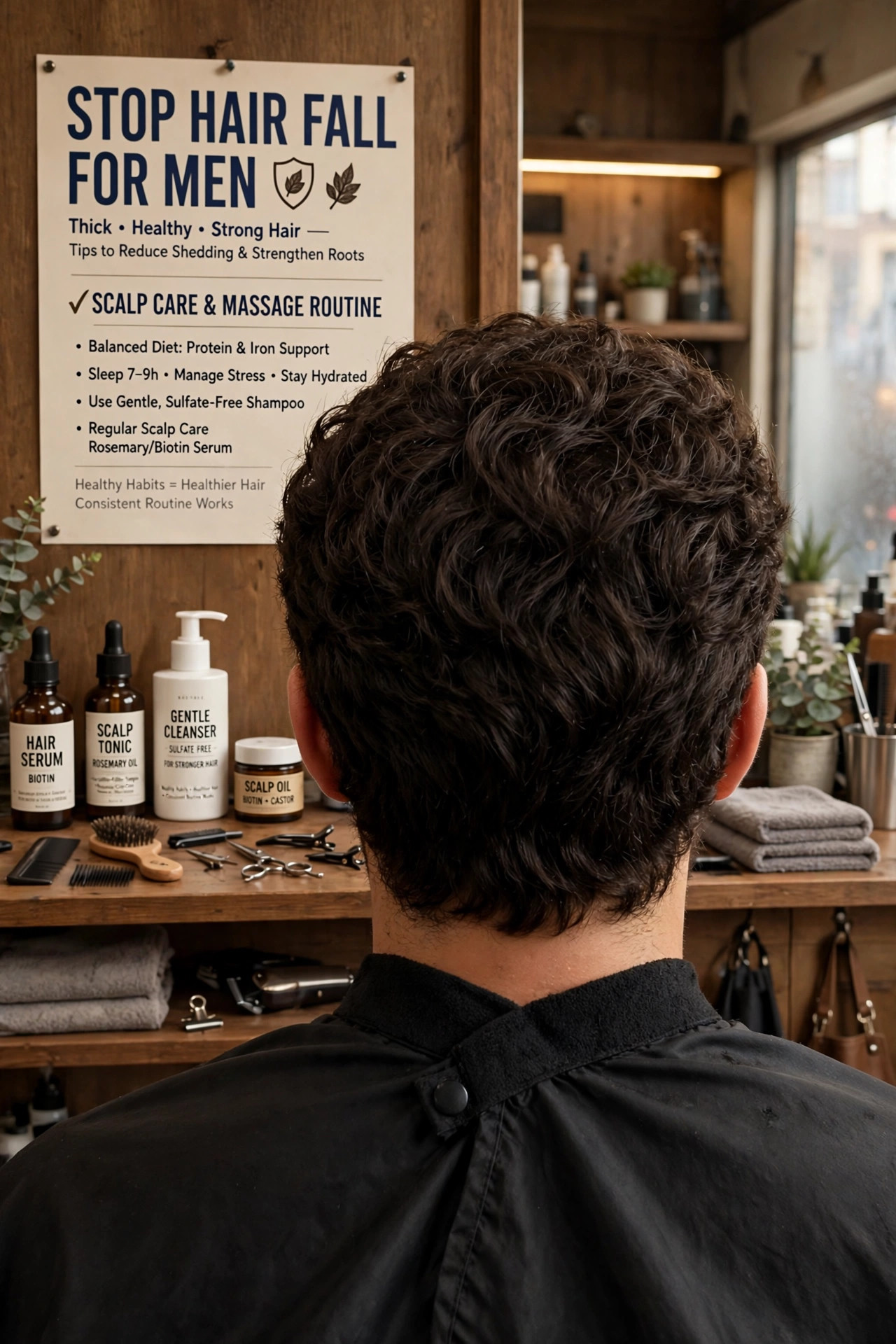
How to Stop Hair Fall for Men: Simple Tips
SHORT ANSWER
Losing 50 to 100 hairs a day is normal. Hair fall becomes a problem when shedding outpaces regrowth, most often from DHT sensitivity, stress, or poor hair care. Wash 2 to 4 times a week with a gentle shampoo, eat enough protein, iron, and vitamin D, and see a doctor if shedding is sudden or does not improve after 3 to 4 months.
| Normal loss | 50 to 100 hairs a day |
| Main cause | DHT sensitivity, stress, or poor hair care |
| Wash | 2 to 4 times a week, gentle sulfate-free shampoo |
| Helpful habits | Protein, iron, vitamin D, 7 to 8 hours of sleep |
| See a doctor | Sudden shedding, patches, or no improvement after 3 to 4 months |
Finding hair on your pillow and in the shower drain is scary, but it is also common. Losing 50 to 100 hairs a day is completely normal. The problem starts when shedding clearly outpaces regrowth: a widening part, more scalp showing at the crown, or handfuls coming out every wash. The good news is that some causes of hair fall are fixable. Here is what actually helps.
Why Men Lose Hair
The most common cause is genetics. Male pattern hair loss is driven by sensitivity to DHT, a hormone that shrinks hair follicles over time. If your father or grandfather lost hair early, your odds go up. This kind of loss is gradual and follows a pattern: receding hairline, thinning crown, or both.
But not all hair fall is genetic. Stress, crash dieting, illness, and nutritional deficiencies can trigger temporary shedding called telogen effluvium. The hair starts falling two to three months after the trigger, then usually recovers once things settle. Hard water, harsh shampoos, and aggressive styling can also weaken hair and increase breakage, which looks like hair fall but is a different problem.
Fix Your Washing Routine
Most men wash wrong. Wash your hair two to four times a week, not every day, and use a gentle sulfate-free shampoo. Scrub the scalp with your fingertips, never your nails. Scalp health is where hair health starts, and an irritated scalp sheds more.
Use conditioner every time you wash, focusing on the lengths and ends. Conditioner does not cause hair fall, no matter what anyone tells you. It protects the hair shaft and reduces the breakage that makes shedding look worse. Towel-dry gently by pressing, not rubbing. Wet hair stretches and snaps easily, and rubbing it dry breaks more hair than almost anything else in your routine.
Diet and Habits That Matter
Hair is mostly protein, so men on low-protein diets often notice thinning within months. Make sure you eat enough protein daily, along with iron-rich foods and vitamin D. Get your vitamin D and iron levels checked if your shedding is sudden, because deficiencies are common and fixable.
Sleep and stress are the quiet culprits. High stress pushes hair follicles into the shedding phase, so chronic stress literally accelerates hair fall. Aim for seven to eight hours of sleep and some daily movement. You do not need a perfect lifestyle, but the basics matter more for hair than any shampoo claims.
What to Stop Doing
Stop these common habits: tight hairstyles pulled back hard every day, hot water scalding your scalp, and bleaching or dyeing at home with harsh chemicals. Each one weakens hair or irritates follicles over time.
Be skeptical of miracle oils and serums. No over-the-counter product stops genetic hair loss, and aggressive marketing targets exactly this fear. Our guide to growing hair faster separates the habits that genuinely support growth from the ones that just cost money.
Treatments That Have Evidence
For genetic hair loss, two treatments have real evidence behind them: minoxidil (topical, over the counter) and finasteride (oral, prescription). Both slow loss for many men, and both take three to six months to show results. Both also come with side effects and need to be continued to keep the gains, so this is a decision to make with a doctor, not a shopping cart.
PRP and hair transplants are the bigger guns, with real results and real costs. A transplant moves your own resistant follicles to thin areas, which is why it works where topicals fail. If you are considering either, see a dermatologist who specializes in hair, not a salon or a clinic selling packages.
When to See a Doctor
See a doctor if your shedding started suddenly, if it comes in patches or with itching and redness, or if you are losing body hair too. These patterns suggest something beyond genetics, like an autoimmune or thyroid issue, and they need medical diagnosis.
Also see a doctor if home changes do nothing after three to four months. Early treatment preserves more hair than late treatment. Waiting a year to “see what happens” costs follicles that might have been saved. Seasonal shedding in autumn is normal too, by the way. Our winter hair care routine covers how cold weather affects hair and what to adjust.
The honest bottom line: you cannot control your genetics, but you can control the habits that make hair fall worse. Fix the routine, fix the diet basics, stop the damaging habits, and get professional help early if genetics are winning.
One thought on “How to Stop Hair Fall for Men: Simple Tips”